

Liposuction is now one of the most popular cosmetic surgery procedures for reshaping the body and removing excess fat from problem areas. Whether it’s the ‘saddlebags’, stomach, hips, thighs or arms, certain areas accumulate stubborn fat despite a balanced diet and regular exercise. These stubborn bulges can affect self-image and limit clothing choices, even in healthy individuals.
Liposuction offers a targeted solution: it removes excess fat cells, sculpts more harmonious contours and, in some cases, reuses this fat to firm up other parts of the body, such as the buttocks. In this article, we explain how liposuction works, the areas most commonly treated, the different techniques available, the post-operative care required and the conditions to be met in order to get the best results. You will also find information on non-surgical alternatives and situations where liposuction is not recommended, to help you make an informed choice that is right for your body type.
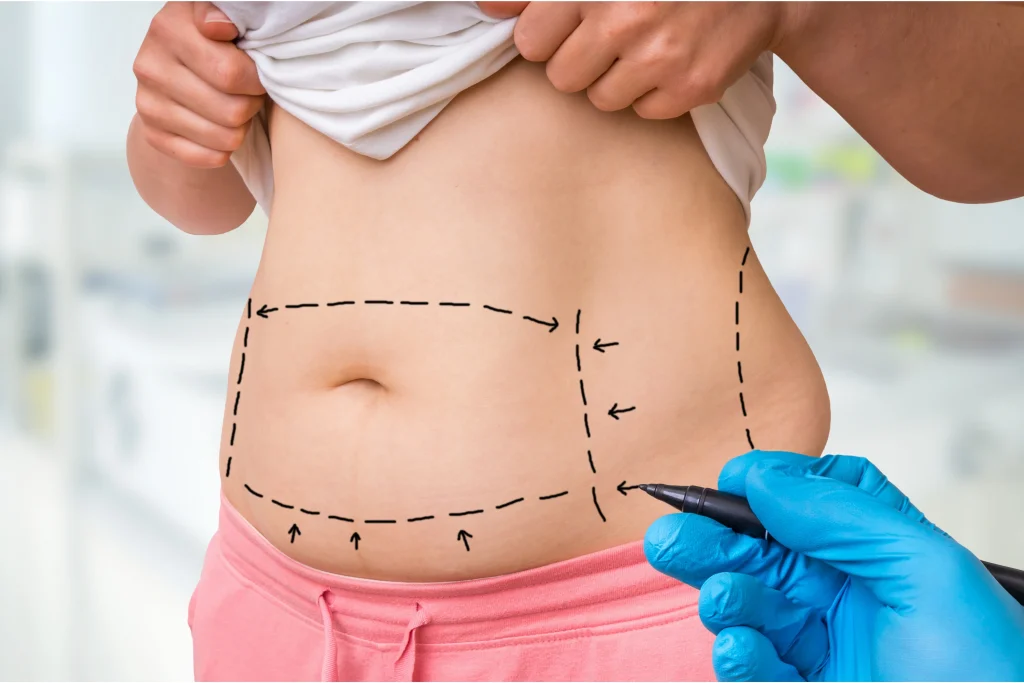
Where does excess body fat accumulate?
Subcutaneous fat forms stubborn bulges that cannot be targeted by diet (overall deficit) or exercise (general metabolism). In women: ‘saddlebags’ (trochanters + lateral hips, 70% gynoid fat); men: visceral waist circumference. Other areas: stomach (adipopexic panniculus), inner thighs (rubbing). Only liposuction selectively removes 2-5 litres of adipocytes (80-95% permanent).
The goal of liposuction: Sculpting a harmonious silhouette
The main goal of liposuction is to sculpt a more harmonious silhouette by removing localised fat deposits that are resistant to diet and exercise. Rather than simply losing weight overall, the aim is to reshape the body by slimming the hips, stomach, thighs, arms or other problem areas in order to better highlight the natural body shape. Liposuction can therefore correct imbalances in volume, smooth transitions between areas and create more fluid and aesthetic lines. When the fat removed is of good quality, it can even be reinjected into other parts of the body, such as the buttocks or breasts, to smooth and firm these areas. For long-lasting, natural results, it is essential to maintain a stable weight after the procedure by combining a balanced diet with regular physical activity.
Liposuction vs stubborn fat
Stubborn fat is characterised by localised deposits that persist despite a balanced diet and regular exercise. Unlike visceral fat, which responds well to overall weight loss, this resistant subcutaneous fat is mainly found in areas such as the stomach, hips, ‘saddlebags’ or inner thighs, where hormone receptors promote storage. The fat cells in these areas fill up easily but are difficult to empty, which explains why conventional efforts sometimes yield limited results. It is precisely for this type of fat that liposuction is particularly effective: it allows excess fat cells to be sucked out directly, without relying solely on the body’s general metabolism. By targeting these stubborn areas, liposuction offers a lasting and targeted solution, while leaving the patient responsible for maintaining their results through a healthy lifestyle.
Procedure
Liposuction is performed in several well-defined stages, usually under local anaesthetic with sedation or under general anaesthetic, depending on the extent of the areas to be treated and the patient’s tolerance. The procedure lasts between 2 and 4 hours on average, depending on the number of areas and the amount of fat to be removed. Before suctioning, the surgeon prepares the area by injecting a tumescent solution composed of saline, adrenaline and a local anaesthetic, which limits bleeding, facilitates the detachment of fat cells and reduces pain. Next, small, discreet incisions (3 to 5 mm) are made in the natural folds of the skin, through which thin cannulas connected to a suction device are inserted. The surgeon then works precisely, using back-and-forth and fan-shaped movements to remove the fat evenly while preserving the symmetry and natural contours of the body. Once the suction is complete, the area is cleaned and then covered with a compression bandage or compression garment to limit swelling, support the skin and promote retraction. For large areas, a short overnight stay in hospital may be recommended, while more limited procedures often allow patients to return home the same day, with close follow-up for the first few days.
Contre-indications : Quand déconseiller ?
- BMI >30 (generalised obesity; prioritise weight loss: diet/sleeve gastrectomy).
- Active skin infection.
- Very loose skin after massive volume loss → combine abdominoplasty/thigh lift.
Ideal combinations: Lipo + abdominoplasty (tummy tuck), lipo + lipofilling of the buttocks. Avoid: Lipo + breast surgery (graft not suitable).
Liposuction is an effective and targeted solution for removing excess fat from problem areas where diet and exercise alone are not enough. By suctioning out stubborn fat cells and precisely reshaping the silhouette, this procedure helps achieve more harmonious contours and greater self-confidence. However, it is not a substitute for a healthy lifestyle: maintaining results requires a balanced diet, regular physical activity and the correct wearing of a compression garment in the weeks following the procedure. When performed by an experienced surgeon and tailored to each patient’s body type, liposuction offers long-lasting, natural and safe results for a permanently refined and reshaped silhouette.

