

A thigh lift (or crural dermolipectomy) is a cosmetic surgery procedure that tightens loose skin and removes excess fat from the inner or outer thighs. With age (collagen loss of 1% per year after the age of 30), weight fluctuations, pregnancy or massive weight loss (e.g. >30 kg), the skin no longer retracts, creating a ‘crepey’ or rubbing appearance. If this causes aesthetic discomfort, physical discomfort or psychological impact, a lift can restore a firm and harmonious silhouette. This article identifies the key signs and tips to help you determine if this is the case for you.
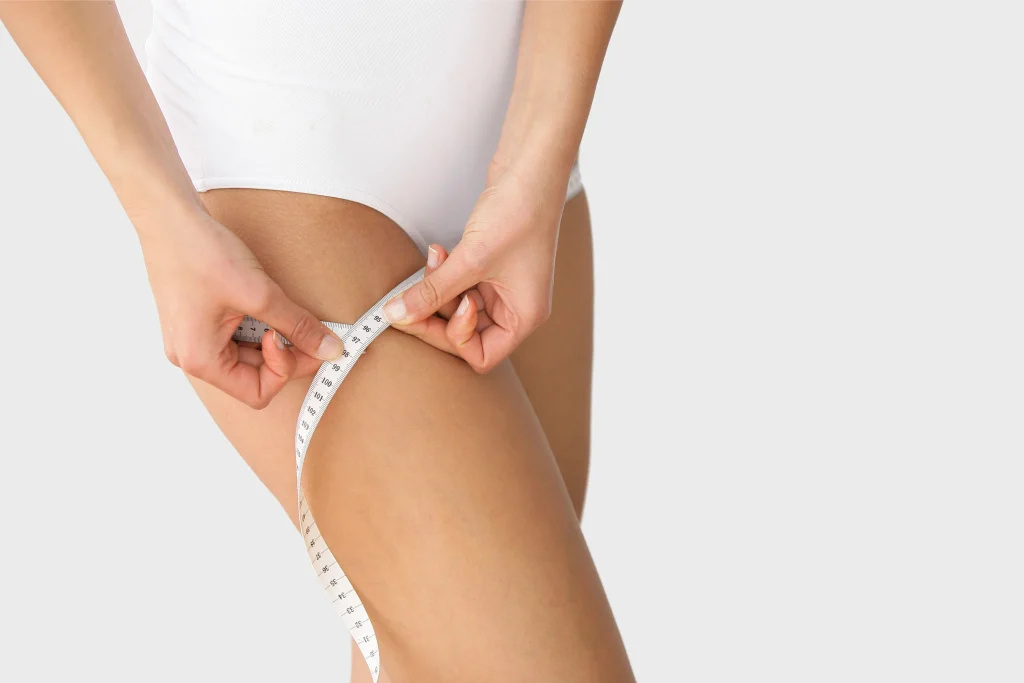
Physical and aesthetic changes: The first warning signs
Loss of skin firmness
With age, the skin on the thighs gradually loses its elasticity: from the age of 30, collagen production drops by 1-2% per year, while elastin fibres break down under the effect of enzymes (elastases). The result is a flaccid, ‘crepey’ texture that is particularly visible on the inner thighs.
This phenomenon is exacerbated by weight fluctuations: rapid weight loss stretches the skin beyond its ability to retract, leaving persistent skin folds and deep wrinkles.
Genetics play a major role: certain constitutions (thin skin, low dermal density) predispose individuals to early ptosis, as do cumulative sun exposure and constant gravity, which inexorably pulls soft tissue downwards.
In summary, these multifactorial factors (biological, environmental, mechanical) lead to unsightly sagging. When folds become visible at rest, rub against clothing or impact your confidence, a thigh lift is an effective solution to restore tone and harmonious contours.
Excess skin and localised fat
After significant weight loss, excess skin often remains: stretched to its maximum for years, it does not retract completely because fibroblasts (collagen-producing cells) struggle to reform a compact dermal matrix. This creates unsightly deep folds on the inner/outer thighs, visible even under loose-fitting clothing.
At the same time, resistant adipose tissue such as subcutaneous fat localised in the thighs and ‘saddlebags’ defies diets and exercise.
Repeated fluctuations (yo-yo weight loss) make everything worse: the cycles of stretching and retraction use up elasticity (30-50% loss after 3 cycles), while genetics promote fat accumulation and age reduces tone (20% loss of elasticity after 40).
Ultimately, this combination of excess skin and fat makes the appearance heavier, undermines confidence and complicates clothing choices. A thigh lift, combined with liposuction, then becomes essential to remove the excess, tighten the tissue and sculpt a refined, firm and proportionate silhouette.
Aesthetic and psychological impact
Flabby thighs or excess skin can severely undermine self-confidence, causing persistent complexes: visible folds under skirts or tight trousers, embarrassment in swimwear at the beach or pool. This restricts clothing choices (favouring loose-fitting clothes), limits social activities (avoiding shorts in summer) and impacts intimacy. Psychologically, this body dissatisfaction can lead to anxiety, social withdrawal or mild depression (studies show that 60% of patients report a boost in self-esteem after a lift). Restoring a firm appearance harmonises the overall silhouette, releasing energy and promoting daily well-being.
Physical discomfort: Beyond aesthetics
Physical discomfort: Beyond aesthetics
Internal thighs in contact cause:
- Redness, maceration, fungal infections (candidiasis in heat >30°C).
- Pain when walking/climbing stairs, special clothing required.
Relief: Absorbent powders (medical talcum powder), but a lift permanently removes the folds.
Activity limitations
- Sport: Running, cycling, yoga (friction + excessive weight).
- Daily life: Early fatigue, cardiovascular impact (less exercise → vicious circle).
Statistics: 70% of patients report resuming sports 3 months after the lift.
Professional advice: Assessment and alternatives
Qualified dermatologists and plastic surgeons provide expert advice to assess the suitability of a thigh lift. They conduct a thorough clinical examination: pinch test (to measure skin elasticity), photographic analysis, ultrasound scan (to measure skin thickness) and assessment of apparent (smoking, diabetes, coagulopathies).
This in-depth assessment identifies contraindications and sets realistic expectations (e.g. 20-30% reduction in thigh circumference, internal scars absorbed within 12 months). They detail the risks (infection 2-5%, seroma 1-3%, transient lymphoedema) and suitable alternatives: radiofrequency (Indiba, +15% collagen), cryolipolysis (fat -25%) or diet/exercise coaching if moderate release (<2 cm).
In short, their personalised guidance – including 3D simulations – ensures an informed decision, minimising regrets and optimising results for a firm and confident silhouette.
When do other methods fail?
Despite sustained efforts, some skin slackening is resistant to non-surgical approaches:
- Diets and exercise: These effectively target visceral fat (deep abs) through calorie deficit and cardio (5-10% BMI loss in 6 months), but are powerless against excess skin after weight loss.
- Firming creams and lasers (e.g. fractional CO2): Stimulate superficial collagen (+10-20% firmness in 3 months), effective for mild sagging, but ineffective on folds >2 cm or severe ‘crepey’ skin.
- Liposuction alone: Removes subcutaneous fat (1-3 L), but worsens ptosis if elasticity is insufficient (sagging ‘empty’ skin).
If results stagnate after months of documented effort, a thigh lift is necessary: precise excision + tension sutures offer 90% satisfaction at 1 year, with a lasting refined silhouette.
To learn more about thigh lifts, visit our website and the following reference sites: Tunisie Esthétique; Medicalys;

