

There are many reasons to consider a tummy tuck. Some people, after significant weight loss, are left with loose, sagging skin on their stomach that exercise alone cannot correct. Others seek to regain their pre-pregnancy figure. This procedure removes excess fat, stretch marks and loose skin, resulting in a smoother, flatter abdomen.
But what happens if you gain weight or become pregnant after the operation? Are the results compromised? Will another abdominoplasty be necessary? Here is what you need to know, especially after weight gain.
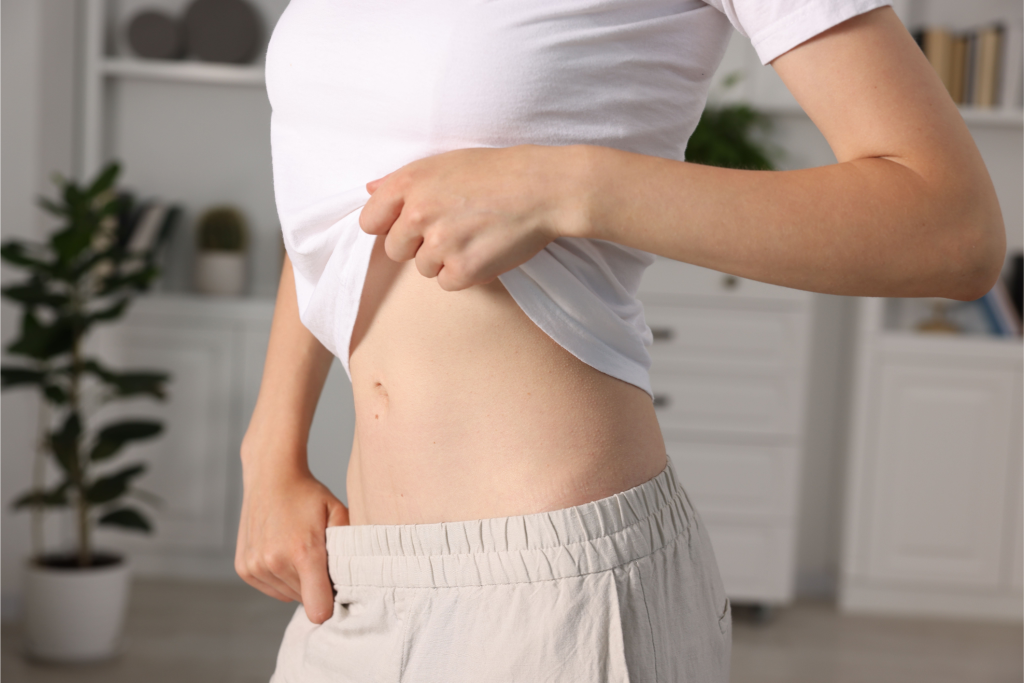
Is weight gain possible after a tummy tuck?
Absolutely, it is completely normal to experience weight fluctuations after a tummy tuck, whether it be slight weight loss or weight gain. These minor variations of 2 to 5 kg do not generally affect the aesthetic results because abdominoplasty does not simply remove superficial fat, but permanently reduces the number of fat cells in the abdominal area.
However, significant weight gain of more than 10-15 kg poses a more serious risk. This is often due to a prolonged calorie imbalance: by consuming more calories than your basal metabolic rate burns (approximately 1,800 to 2,500 kcal/day), and without regular exercise to stimulate energy expenditure, fat inevitably accumulates. This redistribution follows individual patterns determined by genetics (such as a predisposition to store fat in the abdominal area in some people) and hormones. As a result, abdominal protrusion may reappear, although it will be less pronounced than before the operation due to cell reduction.
Fortunately, moderate weight gain (5-10 kg) remains perfectly manageable without resorting to further surgery. Adopt a balanced diet rich in lean protein, vegetables and fibre, combined with 150 minutes of exercise per week. Our cosmetic surgery experts support patients with personalised plans: nutritional consultations, post-operative follow-up and strategies for maintaining long-term results. In the vast majority of cases, these measures are sufficient to regain a slim figure without further intervention.
In the event of significant weight gain and loss
This is the most problematic scenario: excess fat, stretch marks and loose skin may reappear, making a second abdominoplasty necessary to regain the initial results. If at least six months have passed, an examination will assess fat accumulation, skin laxity, and your overall health before any procedure.
Surgeons recommend waiting until your weight has stabilised before the first operation and maintaining a healthy lifestyle afterwards.
What should you do if you become pregnant after a tummy tuck?
Many patients choose abdominoplasty precisely because they do not plan to have any more children. This is because pregnancy after surgery can cause significant loosening of the abdominal wall: the expanding uterus puts continuous pressure on the rectus abdominis muscles, stretching the skin and tissue that has already been tightened by surgery. This can compromise the results, with a possible return of skin laxity or a slight bulge.
However, not all women experience the same effects. For those with excellent skin elasticity (often younger women or those with few previous stretch marks), the abdomen may return to its natural flatness within 6 to 12 months postpartum, thanks to the contraction of elastic fibres and controlled weight loss. No surgical revision is then necessary.
If you have already had surgery and become pregnant, the first step is to inform your gynaecologist-obstetrician immediately. This allows for the possibility of a caesarean section to be anticipated: surgeons can reuse the existing scar from the abdominoplasty (usually a low horizontal incision above the pubic area), thus minimising new marks and preserving aesthetics. Avoid combining abdominoplasty and caesarean section in a single procedure at all costs – complication rates (infections, haematomas, delayed healing) can rise to 20-30% according to clinical data, due to increased inflammation and stress on the recent wound. Postpone any revision surgery until the caesarean scar has healed completely (at least 6-12 months postpartum) and your weight has stabilised.
One exception is for women who do not plan to have children for 5 to 10 years: they can undergo abdominoplasty to enjoy a slimmer figure and a flat stomach during this interim period. In this case, a subsequent revision is still possible, often with optimal results as the tissues have had time to stabilise. Always consult a surgeon for a personalised assessment, including an abdominal ultrasound and hormone test.
For abdominoplasty in Tunisia or for any questions, contact our cosmetic surgery advisors in Tunisia or visit our website and the following reference sites: Medespoir; Tunisie Esthetique; MEDLART…

